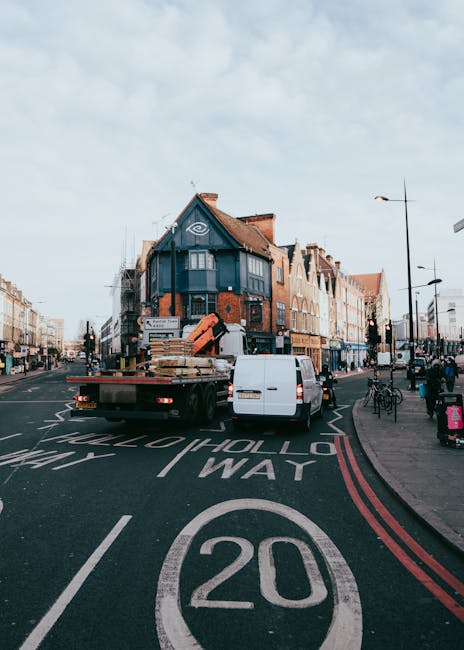
What Hammersmith council permits mean for moving day removals

If you are planning a move in West London, the paperwork can feel heavier than the sofa. That is especially true when parking, loading bays, waiting restrictions, and local access rules come into play. Understanding what Hammersmith council permits mean for moving day removals can save you stress, time, and a very awkward conversation with a traffic warden on a damp Tuesday morning.
In simple terms, council permits affect where a removal van can stop, how long it can stay there, and whether the move can happen smoothly at all. Get it wrong, and you may face delays, extra walking distance, or even a penalty. Get it right, and the day feels much calmer. This guide walks through the practical side of permits, why they matter, how they fit into a real removal day, and what to do to keep your move on track.
To be fair, most people only think about the permit after they have booked the van. That is usually when the penny drops. So let's get ahead of it.
Why What Hammersmith council permits mean for moving day removals Matters
On a removal day, time is not just money; it is momentum. If the van cannot park near the property, every item takes longer to load. Hallways fill up. Neighbours get curious. The kettle is boxed up somewhere impossible. And suddenly a clean, well-planned move starts feeling like a very long shuffle.
In Hammersmith, permits matter because local streets can be tight, parking can be heavily controlled, and even a short stop can be restricted. A permit is often the difference between a van pulling up close to the entrance and a driver circling for space while the team waits with a stack of boxes. That sounds small, but in removals small things snowball fast.
There is also the wider practical issue: if a vehicle parks incorrectly, you may risk disruption to the move, extra fees, or the stress of last-minute changes. For flats, terraces, and roads with limited waiting space, council permit planning is not a nice-to-have. It is part of the job.
Expert summary: A council permit does not make the move more complicated; it usually makes it more predictable. The real value is not the piece of paper itself, but the space and certainty it gives you on the day.
That is why removals professionals often check parking conditions before anything else. In our experience, a well-organised move in Hammersmith nearly always starts with the same question: where will the van stand, and for how long?
How What Hammersmith council permits mean for moving day removals Works
Think of a permit as official permission to use road space in a particular way for a limited period. The exact details depend on the street, the type of vehicle, the loading activity, and any local restrictions in place. Some roads may allow loading for a short time. Others may require a permit or prior arrangement before a removal van can stop without issue.
For moving day removals, the practical steps usually look like this:
- Check the property's street and nearby restrictions.
- Identify whether the van will need to park, wait, load, or unload in a controlled bay or restricted area.
- Confirm whether a permit, dispensation, or another form of parking arrangement is needed.
- Apply in time, if required, and make sure the permit details match the move date and location.
- Share the plan with the removal team so everyone knows the loading point and any time limits.
That sounds straightforward, and often it is. But the detail matters. A permit might apply to one street and not the next. A loading area might be usable in the morning but restricted later in the day. And a bay near the property could be suitable for a smaller van but awkward for a larger one. This is where experience pays off.
If you are using a service like man and van transport, or arranging a bigger move through removal services, the vehicle size can affect the parking plan. A compact van can sometimes make life easier on narrow roads, while a larger truck may need more careful positioning.
One useful rule of thumb: do not treat the permit as a separate admin task. Fold it into the move plan from the start. That way, the booking, access, packing, and parking all line up properly. Simple enough in theory. Much less simple if you leave it until the night before.
Key Benefits and Practical Advantages
Getting the permit side right brings benefits that show up in real ways on the day, not just on a spreadsheet.
- Closer parking: fewer steps between the van and the front door means quicker loading and less chance of damage.
- Better timing: the crew spends less time hunting for space, which helps the schedule hold together.
- Less stress: you are not improvising while holding a coat, a box of cables, and a growing sense of panic.
- Lower risk of disruption: the move is less likely to be interrupted by parking issues or avoidable delays.
- More efficient handling of bulky items: wardrobes, beds, sofas, and appliances are easier to move when the van is close.
There is a quieter benefit too: confidence. When the parking plan is sorted, you make better decisions elsewhere. Packing feels calmer. The removal team can work more efficiently. And if you need to make a quick adjustment, you are doing it from a position of control rather than panic.
That matters especially for older buildings, walk-ups, or roads where access can be fiddly. A permit is not glamorous, but it often prevents the sort of day that becomes the subject of family stories for the wrong reasons.
Who This Is For and When It Makes Sense
Not every move needs the same level of permit planning, but many Hammersmith moves benefit from it. If any of the situations below sound familiar, you should take the issue seriously.
- You are moving from or to a flat on a busy street.
- Your road has controlled parking, resident bays, or loading restrictions.
- You expect the van to stay outside while you load for more than a few minutes.
- There is limited off-street parking near the property.
- The move involves bulky furniture or multiple trips between floors.
- You are using a larger removal van or truck.
- The move is timed around school runs, commuter traffic, or peak periods.
This is also relevant for landlords, tenants, homeowners, students, and small businesses. A student move out of a compact flat can be just as parking-sensitive as a full household relocation. Office moves, meanwhile, can create their own headaches because furniture, equipment, and timing tend to be less flexible than people hope.
If you are comparing different move types, the planning needs can vary. A quick local job might work well with same-day removals, while a larger household move may need a more structured approach through house removals or home moves. The permit question still sits underneath all of them.
Step-by-Step Guidance
If you want the cleanest possible moving day, use a simple process. No drama, no guesswork, just a sensible sequence.
1. Check the street conditions early
Start with the property address and the street itself. Look at whether there are controlled bays, single yellow lines, loading restrictions, or other limitations. If you already know the road is awkward, build that into the plan immediately.
2. Decide what size vehicle you need
The vehicle choice affects whether the van can stop nearby and how easy loading will be. A smaller vehicle may fit tighter streets more easily, while a larger van may reduce trips but need more parking space. Sometimes the right answer is not the biggest van, but the one that suits the road.
3. Confirm whether a permit is needed
This is where many people get caught out. A short loading stop may be fine in one location but not another. If you are unsure, do not assume the rules will be relaxed just because you are moving house. Streets rarely forgive assumptions. They just issue tickets.
4. Apply or arrange permission in good time
If the move requires a permit or parking arrangement, leave enough time to process it. Last-minute planning creates avoidable pressure, and pressure is not your friend on moving day. If your removal company is helping organise the move, ask early how they usually handle parking and access.
5. Share the details with everyone involved
Make sure the driver, the removals team, and anyone helping at the property know the exact parking point, access route, and likely timing. A move runs better when nobody is making assumptions at the kerbside.
6. Prepare the property for quick loading
Move packed boxes near the exit, label fragile items clearly, and keep hallways clear. The less time the team spends navigating obstacles, the more value you get from the parking arrangement. It all connects.
7. Have a backup plan
Even with careful planning, traffic or local road conditions can change. Decide in advance what happens if the nearest bay is unavailable. A nearby side street or a short staggered loading plan can save the day.
A small real-world note: many moves do not fail because of one big mistake. They unravel through a series of little ones. A late permit check, a vague parking plan, a hallway full of coat racks. That sort of thing.
Expert Tips for Better Results
Here is where the practical detail really matters.
- Book parking strategy before packing finishes. It sounds backwards, but it keeps the move aligned from the start.
- Measure your larger furniture. If a sofa needs awkward manoeuvring, the loading route matters more than you think.
- Use clear labels on priority boxes. If you need essential items first, make them easy to spot when the van opens.
- Keep permit paperwork accessible. Not in a random email thread from three weeks ago. Easy to reach.
- Allow a buffer for London traffic. One short delay can ripple through the whole schedule.
- Choose the right level of moving support. If you are dealing with stairs, narrow access, or tight timing, a more experienced team can make a meaningful difference.
Another tip that often helps: think about the building as much as the street. A good parking position is only half the picture if the lift is tiny, the stairs are narrow, or the entrance door opens in a slightly annoying direction. Little things again. Always the little things.
If you are moving office stock, furniture, or heavier items, you may want to look at options such as commercial moves or office removals. These jobs often need tighter timing and more careful access planning than people first expect.
Common Mistakes to Avoid
Most permit-related problems are preventable. The trouble is, they are also easy to underestimate.
- Leaving parking planning too late: the biggest classic mistake.
- Assuming a van can stop anywhere for a few minutes: this is how hassle begins.
- Choosing the wrong vehicle size: too large, and access gets awkward; too small, and the move takes longer than planned.
- Not checking bay times or local restrictions: what looks fine in daylight may not be fine at the actual moving time.
- Forgetting about neighbours or shared access: on busy streets, a blocked entrance can create tension very quickly.
- Failing to brief the removal team: if the driver does not know the plan, the plan is already shaky.
One of the quieter mistakes is overconfidence. People often think, "It'll be fine, it's just one van." Usually that works right up until it doesn't. And then the day gets longer, louder, and more expensive than expected.
Another issue is underestimating how much carrying distance matters. Ten extra metres does not sound like much. Multiply that by dozens of boxes, plus furniture, plus the fact that somebody always forgets the kettle bag. You can see where it goes.
Tools, Resources and Recommendations
You do not need fancy software to manage a move, but a few simple tools help a lot.
- Phone notes or a shared checklist: useful for timings, contact details, and permit reminders.
- Floor plans or a quick sketch: handy if the loading route is unusual.
- Measure tape: essential for doors, lifts, and larger furniture.
- Labels and marker pens: simple, but they save time on the day.
- Box counts by room: useful for estimating how long loading might take.
If you need packing support, services like packing and boxes or packing and unpacking services can reduce last-minute chaos. They are especially helpful when you want to keep the move moving while the permit window is ticking.
For storage-heavy moves, it can also help to consider storage if the timing between properties is not perfectly aligned. Not every move lands neatly in a single day. Real life rarely does.
If you want to understand how the business handles trust, safety, and customer protection, it is sensible to review the company's own policies such as insurance and safety and health and safety policy. That is not just admin for admin's sake. It tells you a lot about how seriously a provider treats the practical side of the job.
Law, Compliance, Standards, or Best Practice
When local parking and moving arrangements are involved, the main principle is simple: follow the rules that apply to the street and the vehicle, and do not assume goodwill will override restrictions. UK moving practices usually depend on a mix of council-controlled parking rules, road markings, local access conditions, and common-sense safety expectations.
For Hammersmith removals, best practice normally includes:
- checking street restrictions before the day
- using only suitable loading areas
- not blocking access for residents, emergency services, or businesses
- keeping the loading process safe and tidy
- making sure the vehicle used is appropriate for the access available
There is also a broader duty of care on the move itself. Furniture should be handled safely, walkways should not be left obstructed, and lifting should be managed sensibly. That becomes more important in stairwells, shared entrances, and tight London streets, where even a small obstruction can create a big nuisance.
If a move involves unusual access, fragile items, or heavy equipment, the team should be thinking beyond parking. A good mover does not just ask, "Where can I park?" They also ask, "How will we move this safely once we are there?"
For customers who want a clear view of terms, pricing, and payment arrangements, the pages on pricing and quotes and payment and security can be helpful background reading. Transparent pricing matters even more when parking conditions or timing constraints affect the final move plan.
Options, Methods, or Comparison Table
There is more than one way to handle a move in a permit-controlled area. The best option depends on the property, the volume of belongings, and how strict the street access is.
| Approach | Best for | Advantages | Watch-outs |
|---|---|---|---|
| Small van with short loading stop | Light moves, tight streets, student moves | Easier access, flexible parking, quicker positioning | May require more trips |
| Standard removal van | Typical house or flat moves | Good balance of capacity and access | Needs more planning in restricted streets |
| Larger truck | Bulkier household moves, bigger furniture loads | More can be moved in one go | Harder to park, more sensitive to street width |
| Staged move with storage | Moves with timing gaps or complex access | Reduces pressure on the main day | More coordination, more planning |
There is no single best method for everyone. Sometimes a smaller van is the smarter choice because it avoids parking trouble. Sometimes a larger vehicle saves time overall despite the extra planning. And sometimes the neatest answer is to split the move across two stages. Not glamorous, but very effective.
Case Study or Real-World Example
Consider a typical flat move near a busy Hammersmith street. The customer had a two-bedroom property, a mix of boxed belongings, and a few awkward items: a bed frame, a large bookcase, and a sofa that looked confident until it reached the hallway.
At first, the plan was to use a larger van and simply "find a space nearby". That sounded fine during the booking call. On the day, though, the nearest obvious spot was already occupied, and the road had active parking restrictions. Rather than forcing the issue, the team adjusted the loading plan, used a slightly smaller vehicle, and positioned it closer to the entrance after confirming the local restrictions in advance.
The result? The move still took effort, of course. Moves do. But it stayed controlled. The boxes were carried in shorter bursts, the furniture did not have to be dragged a long distance, and the residents did not spend the afternoon worrying about parking fines. A small change in planning made the whole day feel more manageable.
That is the real lesson. Permits and parking arrangements are not just bureaucratic extras. They shape how smoothly the physical move unfolds. You notice it most when they go wrong, but you feel it most when they are handled properly.
Practical Checklist
Use this checklist before moving day. It keeps the permit side honest.
- Confirm the exact moving address and street name.
- Check whether the van will need to stop in a restricted or controlled area.
- Decide what size vehicle is best for the property access.
- Ask whether a permit, dispensation, or parking arrangement is needed.
- Schedule the move with enough buffer for traffic and loading time.
- Share the loading plan with everyone involved.
- Label essential boxes and keep them easy to reach.
- Measure large furniture against doors, lifts, and stairwells.
- Keep permits, booking details, and contact numbers handy.
- Have a backup plan in case the nearest bay or loading point is unavailable.
Quick takeaway: if the parking plan is clear, the rest of the move usually gets easier. If the parking plan is fuzzy, everything else tends to wobble a bit.
Conclusion
So, what do Hammersmith council permits mean for moving day removals? In practical terms, they mean the difference between a move that flows and a move that stalls. They shape where the van can stop, how long loading takes, and how calmly the whole day unfolds. For many local moves, especially in busy or restricted streets, they are part of the foundation rather than an optional extra.
The smartest approach is simple: check the street early, choose the right vehicle, line up parking permissions in advance, and treat access planning as part of the move itself. Do that, and you give yourself the best chance of a quieter, cleaner, more efficient moving day. Not perfect, maybe. But much better. And sometimes that is exactly what you need.
If you are planning a move in Hammersmith and want the details handled properly, it helps to work with a team that understands local access, parking pressure, and the realities of London streets.
Get a free quote today and see how much you can save.
Frequently Asked Questions
Do I always need a council permit for removals in Hammersmith?
No, not always. It depends on the street, parking restrictions, the size of the vehicle, and how long the van needs to stop. Some moves can be handled with standard loading access, while others need formal permission or careful parking planning.
What happens if I do not arrange the right parking permission?
You may face delays, longer carrying distances, or parking penalties. Even if the move still happens, it can become slower and more stressful. In a busy area, a small parking issue can ripple through the whole day.
Can a removal van stop outside my property for loading?
Sometimes yes, sometimes no. It depends on local restrictions and street markings. Never assume a short stop is allowed just because you are loading furniture. That is one of those things people learn the hard way, annoyingly.
How far in advance should I check permit needs?
As early as possible. Ideally, parking should be reviewed before you finalise the moving plan, not the night before. Early checks give you more options if the street is tight or busy.
Does van size affect whether I need a permit?
Yes, it can. Larger vehicles are often harder to fit into tight streets or restricted bays, so the parking plan matters more. A smaller vehicle may be easier to position, but might require more trips.
Is a permit the same as a loading bay?
No. A loading bay is a designated place to stop, while a permit is permission or authorisation to use space under certain conditions. The two can overlap, but they are not identical.
Are permits important for flat moves as well as house moves?
Absolutely. Flat moves often involve tighter access, shared entrances, stairs, and less parking flexibility. In some ways, flat moves are even more sensitive to permit planning.
Can removals companies help with parking and access planning?
Yes, many can. A good removals team will look at vehicle size, street access, loading time, and any likely restrictions. It is sensible to ask how they handle parking before the move is booked.
What is the best way to reduce delays on moving day?
Plan the parking early, pack efficiently, label boxes clearly, and keep the route from the door to the van as clear as possible. A smooth route saves more time than most people realise.
Do permit issues affect the final price of a move?
They can, indirectly. If a move takes longer because of access problems or extra carrying distance, the cost may be affected depending on the service and agreement. Clear planning helps reduce that risk.
What if my move is urgent and I do not have much time?
Then the priority is to simplify the move as much as possible. Choose the right vehicle, check access immediately, and keep the loading plan straightforward. Urgent moves can still go well, but they need tighter coordination.
Why does local knowledge matter so much in Hammersmith removals?
Because the area can be busy, access-sensitive, and highly dependent on street-by-street conditions. Someone who knows the local roads, parking patterns, and common pinch points can save you a surprising amount of hassle.