Commercial Moves in Hammersmith
If you are planning Commercial Moves in Hammersmith, you are probably balancing more than just boxes and furniture. Office relocations, shop moves, and business transitions in this part of West London often involve tight schedules, shared buildings, road restrictions, loading access, and the need to keep disruption to an absolute minimum. Whether you are moving a small studio office near the river, relocating a growing team close to Hammersmith Broadway, or shifting equipment from a retail unit in a busy parade, the right moving team can make the process far more manageable.
Hammersmith is a lively commercial area with a mix of modern office developments, converted buildings, retail units, hospitality venues, professional practices, and smaller workspace setups. That variety means no two commercial relocations are ever quite the same. A good moving service should understand the practical realities of the area: time-limited access, basement storage, shared lifts, narrow stairwells, busy main roads, and the need to protect equipment, stock, and furnishings during every stage of the move. That local awareness matters.
This page is designed for business owners, managers, office administrators, and facilities teams looking for a reliable, structured approach to moving. If you need help with planning, packing, lifting, transport, dismantling, reassembly, or timing the move around trading hours, you will find the key information here. Contact us today or request a free quote when you are ready to talk through the details of your move.
Commercial removals tailored to Hammersmith businesses

Commercial removals are rarely as simple as moving items from one building to another. In Hammersmith, many businesses operate from premises that combine modern shared workspaces, older terraces converted into offices, retail units along busy streets, and larger commercial floors in multi-use buildings. That means the move needs to be planned around access points, building rules, and the types of assets being moved.
When people search for business moving support in Hammersmith, they are usually looking for more than transport. They want a team that can help reduce downtime, keep items organised, and handle the practical load of moving desks, chairs, IT equipment, filing cabinets, display stock, and specialist fixtures without unnecessary stress. Commercial Moves in Hammersmith should be about continuity, not chaos.
We understand that every hour matters when a company is relocating. A late delivery of office furniture or a delayed fit-out can affect staff productivity, customer service, and daily operations. For that reason, a local move plan should be clear, realistic, and built around your operating hours, building access windows, and any special handling requirements. Many businesses prefer early morning, evening, or weekend moves to limit disruption, and that is often the most sensible approach in this part of London.
Why local knowledge matters in Hammersmith

Hammersmith has a mix of transport links, commuter traffic, busy arterial roads, and commercial density that can make moving day more complicated than it first appears. A local mover who understands the area is better placed to anticipate access issues, parking limitations, and delivery timing. This is especially useful when your premises are close to the station, near major routes, or in a building with restricted loading access.
Local knowledge also helps with the less obvious parts of the job. For example, some buildings in the area have specific move-in time slots, lift booking requirements, or requirements to protect communal corridors and entrances. If your move includes office furniture, archiving systems, retail fixtures, or IT hardware, these details should be planned in advance so the day runs smoothly.
Nearby locations can also influence how the move is organised. Businesses in Shepherd’s Bush, Kensington, Fulham, Chiswick, and West Kensington often share similar access challenges, particularly where streets are narrow or parking is limited. A local team can take this into account when arranging vehicle size, team numbers, and arrival times. That can save both time and stress.
What commercial moving services can include
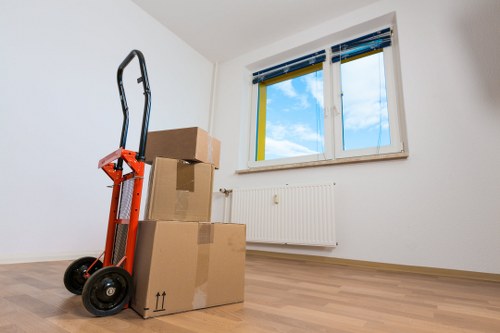
Commercial moves can be tailored to suit the scale and type of business. Some companies only need a straightforward office transport service, while others require packing, dismantling, specialist handling, and coordinated delivery across multiple floors. The best service is one that fits your real needs, rather than forcing you into a one-size-fits-all approach.
Typical services may include:
- Pre-move planning for access, timing, and inventory
- Packing and labelling of office items, files, stock, and equipment
- Dismantling and reassembly of desks, storage units, and workstations
- Secure loading and transport of furniture, technology, and business assets
- Protection materials for floors, doorways, and delicate items
- Unpacking support to help you get operational faster
- Internal office moves for reconfigurations, refits, or floor-by-floor changes
Some businesses also need help with specialised items such as printers, medical equipment, presentation screens, hospitality furnishings, archive boxes, or high-value display stock. In these cases, the right moving team will discuss handling methods and any item-specific requirements before the move day. Clear preparation is what keeps the process efficient.
For larger premises, multiple departments, or phased relocations, a structured move plan can help keep different parts of the business running while the transfer takes place. That can be particularly useful for firms that cannot shut down for a full day or two. The aim is always to move in a way that protects operations as much as possible.
Types of businesses we can help with

Hammersmith has a broad commercial mix, and that is reflected in the kinds of moves local customers request. A business relocation for one company may look entirely different from another, depending on the premises, equipment, and the way the business works day to day.
Common move types include:
- Office relocations for small teams, agencies, consultancies, and professional practices
- Retail moves for shops, showrooms, and product displays
- Hospitality moves for cafés, bars, restaurants, and catering operations
- Warehouse and storage transfers for stock, shelving, and equipment
- Internal business moves within the same building or between nearby floors
- Multi-site business relocations where items need to be coordinated across more than one location
Many Hammersmith businesses operate from modern office blocks close to transport hubs, while others occupy older properties with character and tighter access. Both can be moved successfully with the right planning. In older commercial buildings, stairs, loading bays, and corridor widths may need extra attention. In contemporary offices, lift bookings, security procedures, and timing windows may be the key factors. Every move deserves a practical plan.
If your business shares a premises with other tenants, it is especially important to manage the move carefully so neighbouring occupants are not disrupted. That usually means coordinating arrival times, keeping common areas protected, and ensuring items are moved through the building in a controlled way.
How the moving process usually works

A well-run business relocation should feel organised from the start. The exact process will depend on the size of the job, but most commercial moves follow a similar structure. Knowing what to expect can make planning far easier, especially if you are working to a deadline or managing staff expectations at the same time.
1. Initial discussion
We begin by understanding the size of your move, the nature of your premises, and the timescale you are working to. This is the stage where you can explain access points, parking concerns, any fragile items, and whether the move needs to happen outside normal business hours.
2. Survey and planning
A survey helps identify the volume of items, potential challenges, and the resources needed for the day. This may include team size, vehicle access, packing materials, and special handling for valuable or sensitive equipment. A proper plan reduces delays and avoids last-minute surprises.
3. Packing and preparation
Items are packed, labelled, and organised in a way that makes unpacking easier later. Files, stock, electronics, and office supplies may be grouped by department or destination room. Good labelling can save hours when the business is setting up again.
4. Moving day
On the day, the team loads items carefully, protects floors and doors where needed, and transports everything to the new premises. If your move involves multiple floors, shared entrances, or split deliveries, the sequence is managed to keep things moving efficiently.
5. Placement and set-up
Once at the destination, items can be placed into the correct rooms or zones. Depending on the service arranged, furniture may be reassembled and work areas organised so your team can resume work more quickly. That final stage is often what makes the biggest difference to downtime.
Preparing for your commercial move
Good preparation is one of the easiest ways to reduce disruption. Even a well-managed move can become complicated if key decisions are left too late. The more you can organise in advance, the easier it is for the moving team to work efficiently and safely.
Here is a practical preparation checklist:
- Confirm your moving date and any access windows
- Notify building management, landlords, or shared office operators where necessary
- Set aside documents, IT equipment, and valuables that need special care
- Back up essential digital data before disconnecting equipment
- Label desks, boxes, and furniture by department or room
- Clear walkways and identify items that will not be moving
- Decide whether staff will pack their own workstations or whether packing support is needed
- Arrange parking or loading details if these need to be booked in advance
It is also useful to nominate one person from your business to act as the main point of contact on the day. That helps avoid confusion when decisions need to be made about item placement, access, or sequencing. If you are moving a busy workplace, a simple move plan shared with staff can help everyone understand what they need to do before the relocation begins.
For offices in Hammersmith, it is often worth thinking carefully about transport links for staff and how quickly they can get to the new location after the move. If your team is spread across West London, nearby areas like Ravenscourt Park, Barons Court, Acton, Brook Green, and Hammersmith Broadway may all be relevant when coordinating schedules.
Pricing factors for commercial moves
Every commercial relocation is different, so pricing is usually based on the specific details of the job rather than a fixed standard rate. That is normal for business moves, especially when access, timing, and the type of equipment all affect the amount of labour and planning required.
Factors that may influence the quote include:
- The size of the premises and total volume of items
- Whether packing, dismantling, or reassembly is needed
- The number of floors, stairs, lifts, or long carries involved
- Parking and loading access around the property
- The distance between the old and new sites
- Any specialist handling required for electronics, stock, or delicate items
- The need for evening, weekend, or out-of-hours moving
- Whether the move is phased, urgent, or multi-site
When requesting a quote, it helps to provide as much relevant detail as possible. That might include approximate room counts, furniture lists, floor plans, access photos, and any time restrictions set by your building. The more accurate the information, the easier it is to create a realistic plan. A clear quote process helps businesses budget with confidence.
If your company is comparing options for Commercial Moves in Hammersmith, avoid choosing purely on convenience. It is worth looking at how a provider handles planning, communication, and practical constraints. The cheapest option is not always the best if delays or damage end up costing more in the long run.
Why choose a local company for a Hammersmith move?
A local commercial moving company can offer practical advantages that are especially useful in a busy London district. Hammersmith is a place where access, timing, and awareness of the local environment can have a real impact on the ease of a move.
Benefits of choosing local support include:
- Better understanding of the area and likely access constraints
- Faster scheduling for surveys, planning, and move coordination
- More suitable vehicle and team planning for urban conditions
- Practical experience with mixed property types from offices to retail and hospitality spaces
- Local route awareness to help avoid unnecessary delays
- Easier coordination for repeat visits, phased moves, or internal relocations
Local teams are also more likely to appreciate the working patterns of businesses in the area. Some firms start early and need a quick setup before staff arrive; others work late and need an evening relocation after customers have left. In either case, flexibility is important. That is one reason businesses often prefer a nearby moving service rather than a generic one.
For commercial premises in Hammersmith, nearby road networks and high footfall can make it essential to plan loading times carefully. A local team is more likely to understand the timing pressures and the importance of keeping entrances, pavements, and shared areas clear while the move is in progress.
Areas covered around Hammersmith
Businesses in and around Hammersmith often need moving support across a wider part of West London. A commercial removals service in this area typically covers nearby business districts, mixed-use neighbourhoods, and surrounding residential-commercial zones where smaller firms operate from offices, studios, or converted units.
Areas commonly covered include:
- Hammersmith Broadway
- Brook Green
- Ravenscourt Park
- Barons Court
- West Kensington
- Shepherd’s Bush
- Fulham
- Chiswick
- Kensington
- Acton
This wider coverage is useful for businesses moving between nearby sites, relocating staff into a different office district, or transferring items between storage and operational premises. Having one team handle the process can simplify coordination significantly.
Whether your business is in a modern office near a transport hub or a smaller premises on a quieter side street, the moving approach should be adapted to the environment. That includes considering the right vehicle access, loading sequence, and the safest route for carrying items in and out of the building.
Common concerns from local business customers
Many people arranging a business move in Hammersmith have similar concerns, and that is completely understandable. A commercial relocation affects staff, schedules, operations, and sometimes customer service. Knowing the most common issues in advance can help you plan more calmly.
Will the move interrupt business too much?
That depends on the size of the move and the timing, but many businesses choose out-of-hours or weekend relocation to reduce disruption. Phased moving is another option when a full shutdown is not practical.
What if access is difficult?
Access issues are common in central and inner London areas. Narrow roads, timed loading bays, and lift restrictions can all be managed with proper planning. Letting the moving team know early helps them prepare the right equipment and schedule.
Can delicate equipment be moved safely?
Yes, provided the team knows what is being moved and what precautions are needed. IT equipment, monitors, specialist stock, and sensitive office items should be packed and transported using suitable protection.
Do staff need to do the packing?
Not always. Some businesses prefer to pack in-house to maintain control over files and personal items. Others need full packing support because time is limited. A flexible service can work around either approach.
How do we keep everything organised?
Labelling, room mapping, and clear communication are essential. Many businesses use colour coding or department labels to make unpacking easier at the new site.
What makes a move easier for office teams?
Office teams often want one thing above all else: a move that lets them get back to work quickly. That means the moving plan should focus not just on transportation, but on business continuity. Good organisation can make a major difference to how soon your team feels settled.
To help your office move run smoothly, consider the following:
- Give staff a clear packing deadline
- Identify which items should travel first and last
- Set up a simple labelling system for desks and boxes
- Keep client files and essential documents separate and easy to locate
- Make sure IT equipment is safely disconnected and ready for transport
- Plan where furniture should go in the new layout before move day
For businesses with reception areas, meeting rooms, or customer-facing spaces, it is also useful to plan the layout before arrival. That way, items can be placed into the right position from the start instead of being moved again later. Good set-up planning saves time and energy.
If your business has a lot of short-term storage, archiving, or stock movement, a phased approach may be the best solution. In some cases, it is better to move one department at a time so the rest of the business can continue operating while the relocation is underway.
Frequently asked questions
How far in advance should I book a commercial move in Hammersmith?
It is best to arrange your move as early as possible, especially if you need a specific date, out-of-hours support, or a larger team. Early planning also helps with building permissions and access arrangements.
Can you move businesses in shared office buildings?
Yes, shared workspaces and multi-tenant buildings are common in Hammersmith. The key is to plan carefully around lift access, communal areas, and any building rules set by management.
Do you handle small office moves as well as larger relocations?
Absolutely. Not every commercial move is a full-floor relocation. Many local customers need help with a small office, a single department, or an internal shift within the same premises.
Can the move be arranged outside normal working hours?
In many cases, yes. Evening and weekend moves are often helpful for businesses that want to limit interruption to trading or staff schedules.
What if we only need help with the bulky items?
That is often possible. Some businesses move smaller items themselves and leave desks, cabinets, and heavy equipment to the removal team. A tailored arrangement can be more efficient and cost-effective.
Do I need to empty all filing cabinets and storage units first?
That depends on the item and the moving plan. In many cases, it is safer and easier to move cabinets and units once they have been cleared. However, your service provider can advise based on the type of furniture and contents involved.
Choose a service that supports your business goals
A commercial move is not just a transport job. It is a transition point for your business, and the way it is handled can affect staff morale, customer service, and how quickly you settle into the new space. The best moving support is the kind that understands business priorities, respects deadlines, and handles the practical details with care.
When comparing options for Commercial Moves in Hammersmith, think about the following:
- Does the team understand your property type and location?
- Can they work around your preferred timing?
- Will they help with planning as well as lifting and transport?
- Do they offer a structured, organised process?
- Can they adapt to access problems, shared buildings, or split-site moves?
If the answer to those questions is yes, you are much more likely to have a move that feels under control from start to finish. A local, practical approach can reduce downtime and make the transition easier for everyone involved. Request a free quote when you are ready to take the next step, and speak with a team that understands the demands of moving a business in Hammersmith.
Whether you are planning a small office relocation, moving a retail unit, or coordinating a larger commercial transfer, the right support makes a real difference. Contact us today to discuss your requirements and book a move that fits your schedule, your building, and your business needs.